

Category: Aviation

  • Rogue Goats Ground Flights

    Rogue Goats Ground Flights

    Rogue Goats Ground Flights at Regional Airport, Spark Unlikely Aviation Upgrades

    By [Reporter Name]

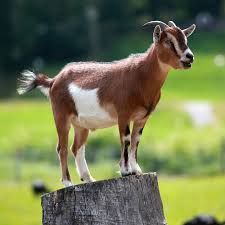
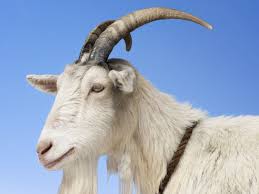
    GREEN RIDGE, Colo. — A herd of 27 goats brought air traffic to a standstill at Green Ridge Regional Airport on Tuesday morning, halting operations for nearly three hours and prompting officials to reevaluate wildlife management at rural airfields.

    The goats, normally employed by the county for eco-friendly brush control along the perimeter of the airport, breached a damaged section of fencing shortly after 7 a.m. and wandered onto the main taxiway and a secondary runway, airport officials said.

    No injuries were reported, and no aircraft were damaged, but three arriving commuter flights were diverted and two departures delayed as ground crews, sheriff’s deputies and the animals’ owner scrambled to clear the tarmac.

    “We’ve trained for birds, deer, even the occasional coyote,” said Airport Director Melissa Vaughn at an afternoon press conference. “Goats on the runway was not in the manual.”
  • A Slow-Motion Emergency

    A Slow-Motion Emergency

    The incident began when a flight instructor taxiing a Cessna 172 for a morning training session reported “multiple animals” on Taxiway Bravo. Within minutes, the airport’s operations center confirmed a herd of goats milling around the pavement and issued a ground stop.

    “They weren’t running. They were just…loitering,” said Air Traffic Controller James Hsu, who was on duty in the tower. “One of them was standing squarely on the centerline like it owned the place.”

    Hsu said he immediately notified approaching aircraft, including a Denver-bound regional jet on final approach, which executed a go-around and circled until it was diverted to a larger nearby airport.

    Body camera footage from a responding sheriff’s deputy shows the animals standing calmly beneath the wing of a parked turboprop, nibbling at weeds poking through cracks in the asphalt.

    “They were completely unfazed by the sirens,” Deputy Carla Mendes said. “You don’t usually have to negotiate with livestock when you’re securing a runway.”

  • Eco-Grazers Turn Aviation Hazard

    Eco-Grazers Turn Aviation Hazard

    The herd belongs to local rancher and contractor Miguel Ortega, whose company, Highline Grazing Services, has a three-year contract with the county to use goats for vegetation control on public lands, including the airport’s outer fields.

    The program is part of a broader push to reduce herbicide use and lower wildfire risk by clearing dry brush naturally — a practice adopted by several Western municipalities in recent years.

    “The goats have been working around the south and east fence lines all summer without any problems,” Ortega said. “We do this for utility companies, solar farms, even along highways. This is the first time my animals have accidentally turned into air traffic controllers.”

    Preliminary investigation suggests a combination of heavy weekend rains and an aging section of fencing allowed the animals to push through a weakened post and walk directly onto restricted airport property.

    “They followed the green,” Ortega said, gesturing toward the taxiway’s thin strip of vegetation. “To a goat, grass doesn’t stop just because the pavement starts.”

  • Near-Miss Avoided

    Near-Miss Avoided

    The Federal Aviation Administration (FAA) confirmed it is reviewing the incident, though spokesperson Karen Ellison stressed that no formal investigation has been opened yet.

    “Runway incursions involving wildlife are not uncommon, especially at smaller airports,” Ellison said in a statement. “However, this case is notable due to the number and type of animals involved.”

    Pilots on scene praised the swift action from the control tower.

    “We were holding short of the runway, and tower told us, ‘Expect delay, we’re dealing with goats,’” said Capt. Alan Reeves, a commuter airline pilot whose 9 a.m. departure was postponed. “You don’t hear that every day, but they made the right call. A 150-pound goat can do serious damage to a landing gear.”

    According to FAA data, wildlife strikes — most often involving birds — have caused hundreds of millions of dollars in damage to aircraft over the last decade. Land mammals, including deer and coyotes, represent a smaller but still significant risk during takeoff and landing.

    “Even at 80 knots on the runway, you don’t want to meet a hoofed animal,” said aviation safety consultant Dr. Priya Mandal. “This could have been much worse if it had occurred during a landing roll-out instead of during low-traffic morning taxi operations.”