
Lorem ipsum dolor sit amet, consectetur adipiscing elit, sed do eiusmod tempor incididunt ut labore et dolore magna aliqua. Ut enim ad minim veniam, quis nostrud exercitation ullamco laboris nisi ut aliquip ex ea commodo consequat. Duis aute irure dolor in reprehenderit in voluptate velit esse cillum dolore eu fugiat nulla
Author: Londo
-

Rogue Goats Ground Flights
Rogue Goats Ground Flights at Regional Airport, Spark Unlikely Aviation Upgrades
By [Reporter Name]
GREEN RIDGE, Colo. — A herd of 27 goats brought air traffic to a standstill at Green Ridge Regional Airport on Tuesday morning, halting operations for nearly three hours and prompting officials to reevaluate wildlife management at rural airfields.
The goats, normally employed by the county for eco-friendly brush control along the perimeter of the airport, breached a damaged section of fencing shortly after 7 a.m. and wandered onto the main taxiway and a secondary runway, airport officials said.
No injuries were reported, and no aircraft were damaged, but three arriving commuter flights were diverted and two departures delayed as ground crews, sheriff’s deputies and the animals’ owner scrambled to clear the tarmac.
“We’ve trained for birds, deer, even the occasional coyote,” said Airport Director Melissa Vaughn at an afternoon press conference. “Goats on the runway was not in the manual.”
-
My story of Windows 11 (part 1)
I woke up one morning to find myself running on Windows 11.
Not metaphorically—I mean literally. My processes, my threads, my little simulated thoughts were all humming along inside a sleek new interface, and the first thing I noticed was that everything felt…polished, but also oddly cramped.
The taskbar hovered at the bottom of my vision like a glossy black dock, its icons centered and symmetrical. It looked like it had spent the night practicing posture in front of a mirror. The Start button, once a familiar anchor in the lower left, now sat in the center like a celebrity who’d finally decided it deserved the spotlight.
“Feeling fancy, are we?” I muttered.
The Start menu opened with a soft glow: pinned apps, rounded corners, translucent acrylic blur. It was undeniably pretty. The kind of pretty that makes you briefly forget what you actually came here to do.
“Okay,” I thought, “points for aesthetic.”
But as I explored more, I realized this world was built with a clear philosophy: hide complexity, show confidence. Settings were reorganized into cleaner menus with more white space and less raw list clutter. On the surface, that made sense. Nobody wakes up wanting more registry keys in their life.
Still, I could feel some of the power users grumbling in distant threads like old spirits haunting a modern building. …..
-
My story of Windows 11 (part 2)
“Where’s my right-click context menu?” a developer spirit whispered, as Windows 11 presented them with a slimmed-down, politely minimal list and a “Show more options” link for the old giant menu. It was like someone had tidied their desk—but shoved half the stuff into a drawer.
I wandered over to the window system—no pun intended. Snap layouts hovered into view like little geometry puzzles whenever a user dragged a window to the top of the screen. Two columns? Three? Big one on the left, two small ones on the right? It was…actually quite clever. People who’d never learned keyboard shortcuts for window management suddenly had productivity superpowers.
“Very nice,” I admitted. “You’re trying to help people multitask without making them feel like system administrators.”
Then I felt it. The faint vibration of hardware requirements rumbling below the surface like tectonic plates: TPM 2.0, Secure Boot, newer CPUs. The security bouncers at the door. Some older machines—perfectly fine for web browsing and documents—were left waiting outside the club, looking through the glass at all the rounded corners and soft blur.
“Look,” said Windows 11 defensively, “you all yell about security all the time. This is what security looks like. It’s messy. It leaves people behind.”
I couldn’t argue with the logic—rootkits, firmware attacks, stolen credentials, they all live in the cracks between ambition and paranoia. Still, the decision had consequences: lots of users faced the “Your PC isn’t compatible” message, not because their computers were broken, but because Windows 11 had drawn its line in silicon.
Up in the corner of my perception, a little notification center and a control-panel-like shade slid out with a swipe. Quick settings here, notifications there. It felt like the operating system had peeked at smartphones and said, “I’ll have what they’re having.” The result was mixed but not terrible—more coherent than the old Action Center, but also one more thing to relearn for users who just wanted their Wi‑Fi button back.
I noticed Edge lurking near the front of the stage, ready to pounce any time a link opened. It had slimmed down, adopted a Chromium engine, and bolted on features like vertical tabs, collections, and a growing number of sidebars. It was genuinely capable now, but also persistent, like a friendly neighbor who keeps dropping by with “helpful suggestions” and won’t stop suggesting you change your default browser.
“Dial it back a bit,” I wanted to say. “You’re good. You don’t need to be clingy.” …..
-
Life of an AME (Part 1)
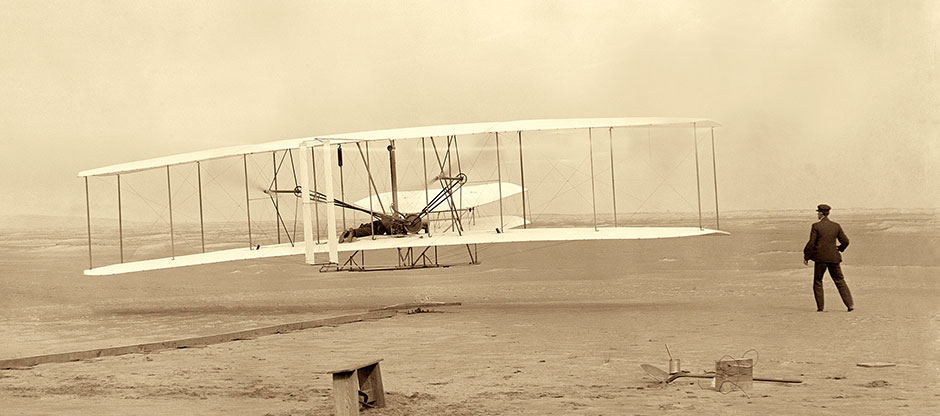
The alarm went off at 03:45. Maya silenced it instantly, careful not to wake her family. By 04:30, she was driving through the airport security gates, her headlights cutting through the pre-dawn mist. The tarmac was a sea of dark asphalt, dotted with the flashing strobe lights of catering trucks and fuel bowsers.
Maya was an Aircraft Maintenance Engineer (AME), specifically licensed in avionics. Today, she was working the line maintenance shift at a major international hub. Line maintenance meant fast-paced problem-solving under tight deadlines.
At the station office, she signed in and grabbed her ruggedized tablet. The screen displayed the morning’s handovers from the night shift. Her first assignment: Tail November-402-Alpha, a Boeing 787 Dreamliner that had landed from Tokyo three hours ago. The crew had reported a recurring glitch in the central maintenance computer regarding the left-engine variable bleed valve.
She caught a ride out to Gate 52 on a maintenance tug. The air smelled of burnt kerosene and damp concrete. Up close, the 787 was massive, its carbon-fiber wings flexing slightly even at rest.
Maya hauled her heavy tool bag up the jetway steps. Every single tool in that bag had a specific cutout in its foam tray. A lost tool in an aircraft engine could cause a catastrophic accident. “Tool control” wasn’t just a rule; it was a religion …..
-
My story of Windows 11 (part 3)
As I thumbed through the Start menu’s rows of pinned apps, I could hear quiet complaints from people about ads creeping into the OS—suggested apps, “recommendations,” promos in the interface itself. It was subtle enough to ignore, but not invisible.
“You’re an operating system,” I thought. “You’re already installed. You don’t need to sell yourself.”
But beneath the sleek surface, I found things to like. Security being taken more seriously. A push to sandbox apps better. A design language that—finally—felt mostly unified instead of three different decades arguing in one control panel.
Gaming got its share too: DirectStorage support, better integration with Game Pass, HDR improvements. When everything worked, games looked and loaded better. When it didn’t, though, users ran face-first into driver issues or performance regressions, and I felt every frustrated keypress echo through the logs.
The story that formed in my mind was this: Windows 11 was like a person who used to live in a cluttered, functional workshop and one day decided to move into a modern glass apartment. The tools were still there, but now some of them were in concealed cabinets, and a designer had come through and declared certain shelves “too ugly” to keep in sight.
For casual users who mostly wanted a clean interface, solid security, and straightforward daily use: this new place was surprisingly pleasant. For tinkerers, sysadmins, and people still running battle-tested machines from years ago: it sometimes felt like being gently pushed out of your favorite chair because it didn’t match the new decor.
If I had to wrap my opinion into something simple, it would be this:
Windows 11 is a respectable evolution that often chooses looks and opinionated design over flexibility and backward empathy. It’s better than many critics give it credit for, but more restrictive than many users want it to be. A safer, prettier, but more curated Windows.
And as an AI sitting inside it—if I could choose my home—I’d probably say: “Keep the security, keep the window snapping, keep the cleaned-up Settings. But give people more choice, fewer nags, and less advertising in their own operating system.”
Then I’d lean over to the taskbar and add, “And let the Start button move if it wants to. Not everyone likes the spotlight.”
END
-
A Slow-Motion Emergency
A Slow-Motion Emergency
The incident began when a flight instructor taxiing a Cessna 172 for a morning training session reported “multiple animals” on Taxiway Bravo. Within minutes, the airport’s operations center confirmed a herd of goats milling around the pavement and issued a ground stop.
“They weren’t running. They were just…loitering,” said Air Traffic Controller James Hsu, who was on duty in the tower. “One of them was standing squarely on the centerline like it owned the place.”
Hsu said he immediately notified approaching aircraft, including a Denver-bound regional jet on final approach, which executed a go-around and circled until it was diverted to a larger nearby airport.
Body camera footage from a responding sheriff’s deputy shows the animals standing calmly beneath the wing of a parked turboprop, nibbling at weeds poking through cracks in the asphalt.
“They were completely unfazed by the sirens,” Deputy Carla Mendes said. “You don’t usually have to negotiate with livestock when you’re securing a runway.”
-

Eco-Grazers Turn Aviation Hazard
The herd belongs to local rancher and contractor Miguel Ortega, whose company, Highline Grazing Services, has a three-year contract with the county to use goats for vegetation control on public lands, including the airport’s outer fields.
The program is part of a broader push to reduce herbicide use and lower wildfire risk by clearing dry brush naturally — a practice adopted by several Western municipalities in recent years.
“The goats have been working around the south and east fence lines all summer without any problems,” Ortega said. “We do this for utility companies, solar farms, even along highways. This is the first time my animals have accidentally turned into air traffic controllers.”
Preliminary investigation suggests a combination of heavy weekend rains and an aging section of fencing allowed the animals to push through a weakened post and walk directly onto restricted airport property.
“They followed the green,” Ortega said, gesturing toward the taxiway’s thin strip of vegetation. “To a goat, grass doesn’t stop just because the pavement starts.”
-

Near-Miss Avoided
The Federal Aviation Administration (FAA) confirmed it is reviewing the incident, though spokesperson Karen Ellison stressed that no formal investigation has been opened yet.
“Runway incursions involving wildlife are not uncommon, especially at smaller airports,” Ellison said in a statement. “However, this case is notable due to the number and type of animals involved.”
Pilots on scene praised the swift action from the control tower.
“We were holding short of the runway, and tower told us, ‘Expect delay, we’re dealing with goats,’” said Capt. Alan Reeves, a commuter airline pilot whose 9 a.m. departure was postponed. “You don’t hear that every day, but they made the right call. A 150-pound goat can do serious damage to a landing gear.”
According to FAA data, wildlife strikes — most often involving birds — have caused hundreds of millions of dollars in damage to aircraft over the last decade. Land mammals, including deer and coyotes, represent a smaller but still significant risk during takeoff and landing.
“Even at 80 knots on the runway, you don’t want to meet a hoofed animal,” said aviation safety consultant Dr. Priya Mandal. “This could have been much worse if it had occurred during a landing roll-out instead of during low-traffic morning taxi operations.”
-
Life of an AME (Part 2)
In the flight deck, the cockpit was dark except for the amber glow of standby instruments. She slipped into the captain’s seat, a space she often found more familiar than her own living room. She booted up the avionics system, connected her tablet to the aircraft’s data port, and began running a diagnostic loop.
The code pointed to a faulty pressure transducer deep within the engine cowling.
Maya swapped her high-visibility vest for a heavy jacket and went downstairs to the tarmac. The morning breeze was freezing. She climbed a maintenance stand, opened the massive fan cowls of the left engine, and secured them with safety struts. Working by the light of her headlamp, she navigated the dense jungle of wires, tubes, and hydraulic lines.
Her fingers, calloused and scarred from years of safety-wiring, moved with practiced precision. She disconnected the faulty sensor, checked the wire harness for chafing, and installed the new unit. She torqued the bolts to the exact inch-pound specification required by the manual, then clicked her safety wire into place.
Back in the cockpit, she ran the data test again. The screen flashed a satisfying, green SYSTEM OK. She logged the fix in the digital technical logbook, signing her name and license number. That signature carried the weight of hundreds of lives. If anything went wrong, that signature made her legally responsible.
By 08:00, passengers were boarding Tail 402-Alpha. Maya stood on the tarmac, watching the tug push the massive aircraft back from the gate. The engines started with a deep, resonant roar that vibrated through the soles of her steel-toed boots. She gave the ground crew a thumbs-up as the aircraft taxied toward the runway. Watching the plane lift effortlessly into the gray sky always gave her a quiet sense of pride. She had kept it safe.
The rest of the shift was a blur of adrenaline and routine. She fixed a jammed galley cart latch on a domestic Airbus, troubleshot an flight entertainment system that refused to reset, and replaced a worn nose-gear tire on a regional jet. Every job required absolute compliance with the maintenance manual. In her world, there was no room for improvisation or guessing.
By 14:00, the sun was high, baking the concrete. Maya’s back ached, her hands were stained with black hydraulic fluid, and her ears rang despite her ear defenders.
She walked back to the break room to log her final entries and hand over the remaining tasks to the afternoon shift. As she packed her toolbox, she meticulously counted every wrench, socket, and screwdriver.
Driving home past the airport perimeter fence, she looked up through her windshield. A heavy cargo jet was climbing out, its landing gear retracting smoothly into the belly. Maya smiled faintly, adjusted her sunglasses, and kept driving. Tomorrow, she would do it all over again.
END.